Four-corner architecture
A and C provide sample-based body and texture; B and D add FM algorithms, operator waveforms and metallic harmonic detail.
 Ghost Vector
Hybrid vector / FM instrument
Ghost Vector is a hybrid vector/FM instrument built around four sound corners, animated movement, deep modulation and a TG-style interface. It is designed for glassy FM tones, sample atmospheres, slow evolving pads, eerie digital choirs and playable cinematic textures.
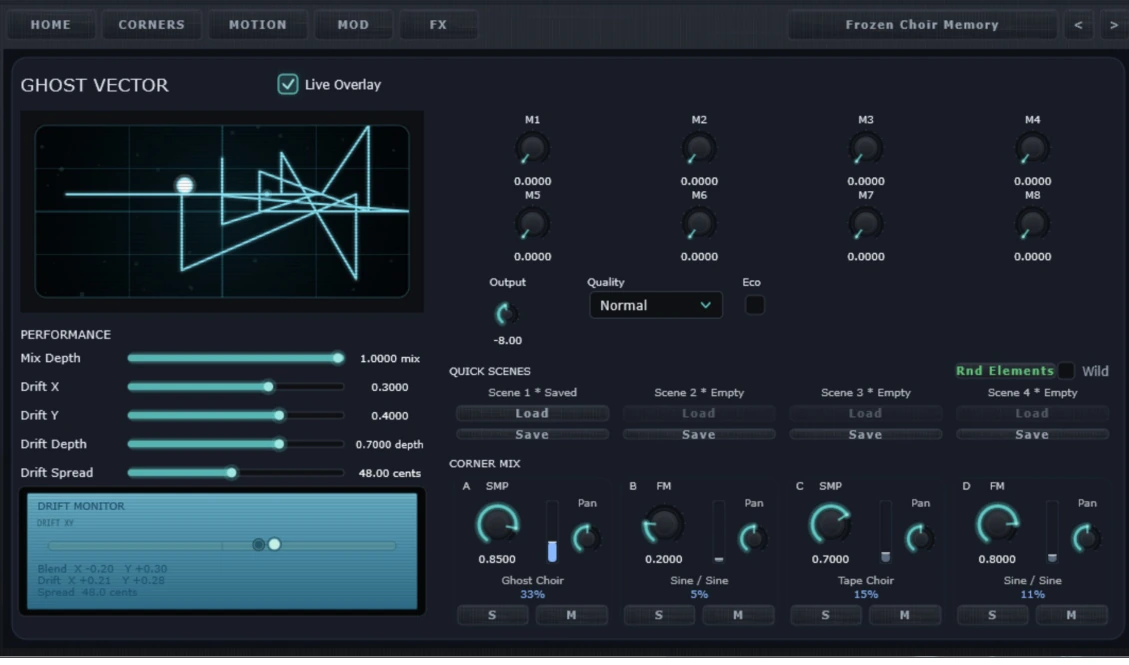
A and C provide sample-based body and texture; B and D add FM algorithms, operator waveforms and metallic harmonic detail.
Draw Blend movement for the audible corner mix, then use Drift for controlled instability, pitch spread and less static digital behaviour.
The Home page keeps vector display, macros, drift monitor, quick scenes, output and corner mix visible while you play.
Unison, Vector FX Morph, Ensemble, Delay, Reverb, Shimmer and DAC/output colour move patches from clean digital tones into cinematic space.
Video demo
Watch the current Ghost Vector demo and hear the four-corner vector/FM engine, movement, drift and atmospheric digital tone in context.
Sound palette
Metallic operators, short envelopes, plate-style space and TG-like output colour.
Choir, tape and vowel sample corners with low FM shimmer, cloud reverb and subtle drift.
Long envelopes, slow Blend lanes, wider Drift spread and darker DAC character for archive-like movement.
Sample transients layered with FM partials, delay, shimmer and quick vector changes.
Workflow
Build a patch by balancing the four corners, then animate the blend and drift lanes. Finish with modulation and FX only after the main vector movement feels musical.
Documentation
The manual covers Home, Corners, Motion, Mod, FX, sound design recipes, troubleshooting and practical workflow notes.
Available now
Hybrid vector/FM motion, atmospheric digital tone, animated drift and four-corner performance control.